


Summary of Research Results
☑ Changes in Output Value and Service Visits
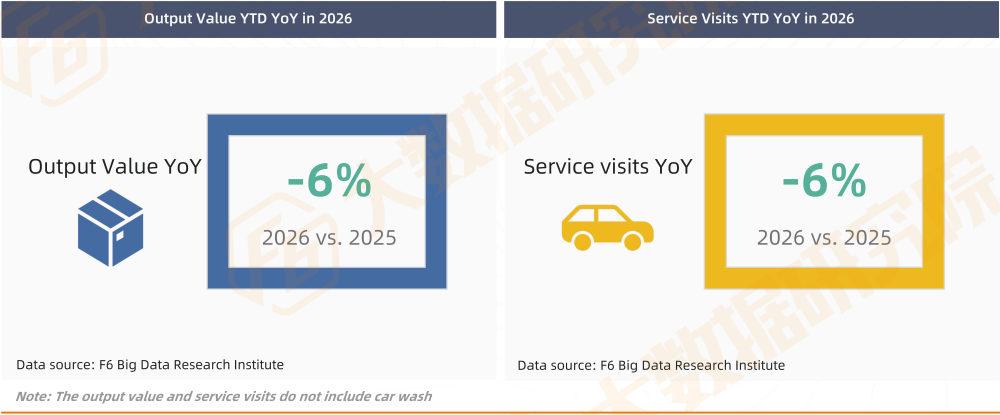
From January to September 2026, both the output value and service visits YTD of the automotive aftermarket declined by 6% YoY, with the decline widening from 5% YoY in mid-year, indicating that the industry remained in a sluggish state with persistent downward pressure.
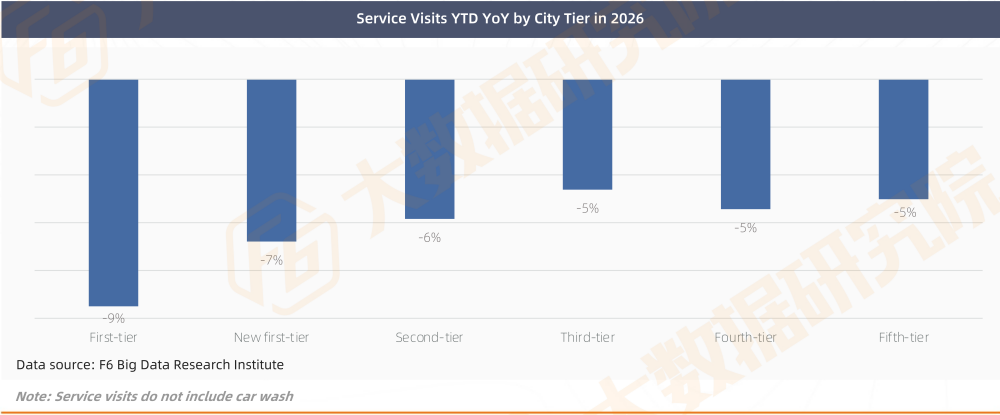
From January to September 2026, the YoY declines in maintenance demand across all city tiers continued to widen from Q2. Service visits in first-tier, new firsttier, and second-tier cities declined by over 5% YoY, while those in third-tier and below cities remained within 5%.
In Q3, service visits across all service categories recovered QoQ on a phased basis, but declined across the board YoY, reflecting overall cautious consumer sentiment, with the pressure on customer traffic recovery being a common challenge across all businesses.
☑ Category Sales
From January to September 2026, control arms, shock absorbers, and water pumps achieved modest positive growth in service visits. Battery, however, shifted from 5% YoY growth in service visits in mid-year to a 2% YoY decline currently, indicating rapidly fading demand growth momentum.
In Q3, 10 categories including engine oil, tires, and brake pads faced across-the-board YoY sales volume declines, facing significant pressure. Gear oil, coolant, shock absorbers, and other categories maintained positive growth only in selected regions, showing notable regional divergence.
In Q3, average prices of most categories increased YoY, with gear oil, brake fluid, coolant, and water pumps seeing notable price hikes, all rising by over 3% YoY.
☑ Vehicle Brand
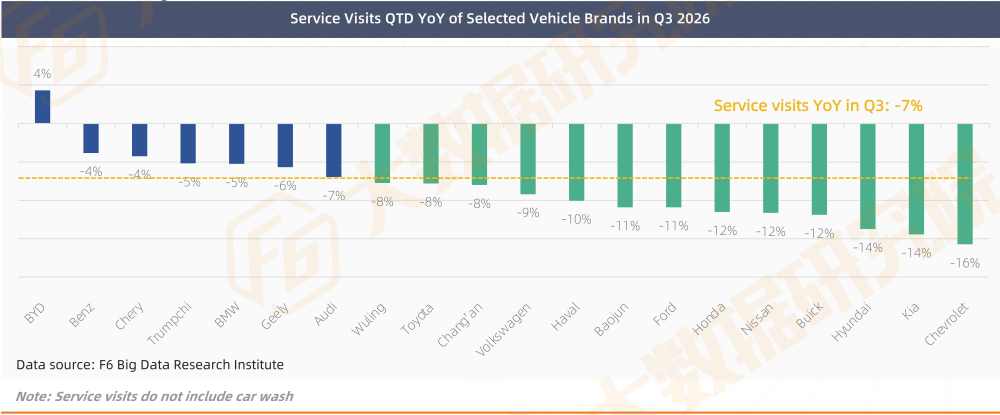
From January to September 2026, BYD achieved 6% YoY growth in service visits; Mercedes-Benz and Chery saw declines of 1% and 2% YoY, respectively; Chevrolet, Kia, Hyundai and other brands experienced a notable contraction in maintenance demand.
From January to September 2026, ICE vehicles faced downward pressure on maintenance demand, with output value and service visits declining by 8% and 9% YoY, respectively, while NEVs grew by 17% and 19% YoY, respectively, reflecting the ongoing shift in the aftermarket landscape between conventional and new energy vehicles.
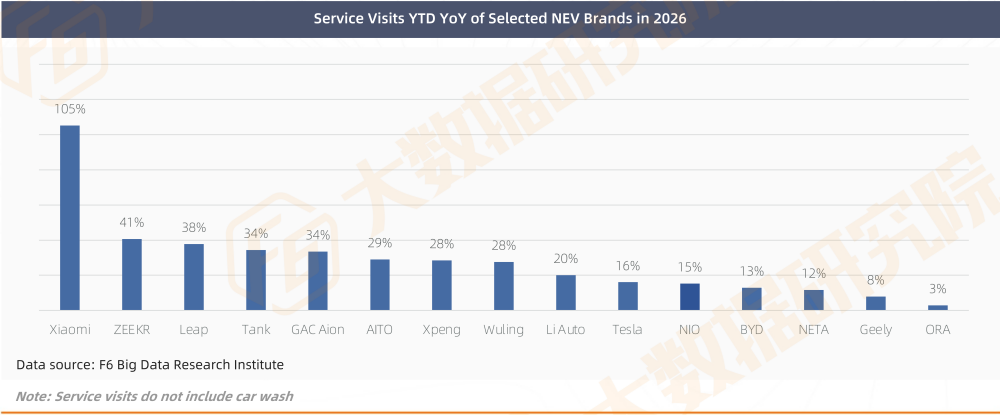
From January to September 2026, service visits of major NEV brands all maintained an upward trend YoY, but the gap in maintenance traffic among brands is gradually widening.
☑ Industry Trends
In Q3, policy initiatives continued to advance, including the implementation of 17 new measures by nine government departments, the national safety standard for NEV repair taking effect in August, and the release of the national standard for in-service testing of power batteries, further optimizing the policy environment for the aftermarket.
In Q3, the share of service visits from NEVs rose to 13.6%, indicating deepening market penetration.
For the full year of 2026, the YoY declines in aftermarket output value and service visits YTD are expected to remain at the current 6% level.
Key Data Insights
01. Output Value/Service Visits YTD YoY in 2026
As of September 2026, the automotive aftermarket saw output value and service visits YTD both decline by 6% YoY, with the decline widening further from mid-year (a 5% YoY decline), indicating that the industry remains in a sluggish state with persistent downward pressure.
02. Service Visits YTD YoY by City Tier in 2026
As of September 2026, YoY declines in maintenance demand across all city tiers continued to widen from Q2: first-tier and fourth-tier cities saw slightly deeper declines, while other city tiers each expanded by around 1 percentage point. In addition, the trend of narrowing YoY declines in service visits as city tier descends continued.
03. Service Visits YTD YoY by Store Type in 2026
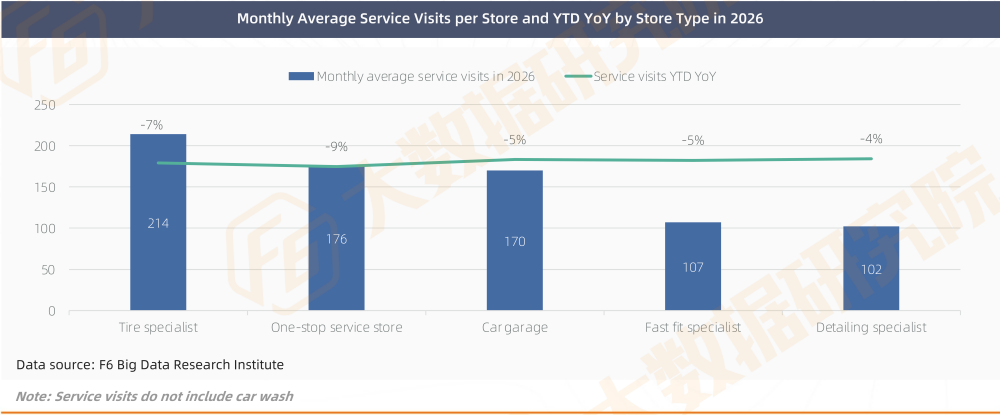
As of September 2026, by store type, high-traffic stores such as tire specialists and one-stop service stores continued to beargreater operational pressure, with YoY declines in service visits exceeding 7%. Detailing specialists were the only store type to keep YoY declines within 5%, but the decline widened by 2 percentage points from the 2% recorded at mid-year, indicating rising operational pressure.
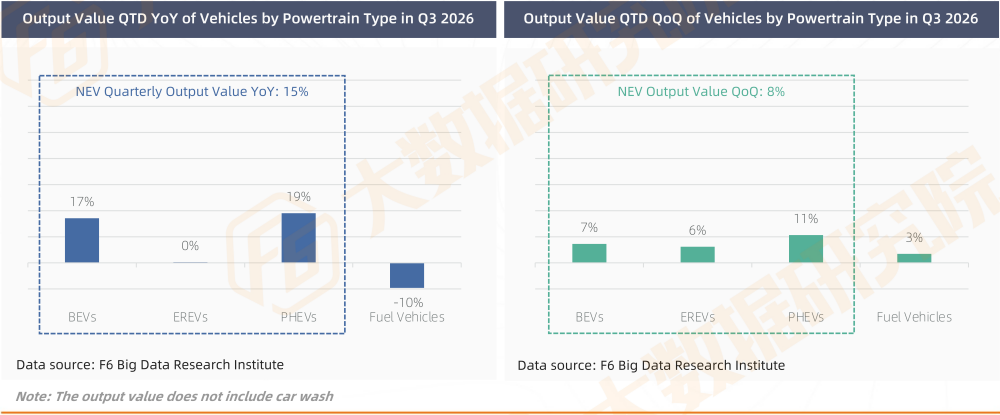
04. Output Value YoY/QoQ of Vehicles by Powertrain Type in Q3
In Q3 2026, the output value of vehicles by powertrain type in the aftermarket showed divergent YoY trends: NEVs grew by 15% YoY, while gasoline vehicles declined by 10% YoY. By QoQ, ICE vehicles saw output value grow by 3% QoQ, but the momentum for QoQ recovery was notably weaker than that of all NEV powertrain types.
05. Service Visits YoY/QoQ by Service Type in Q3
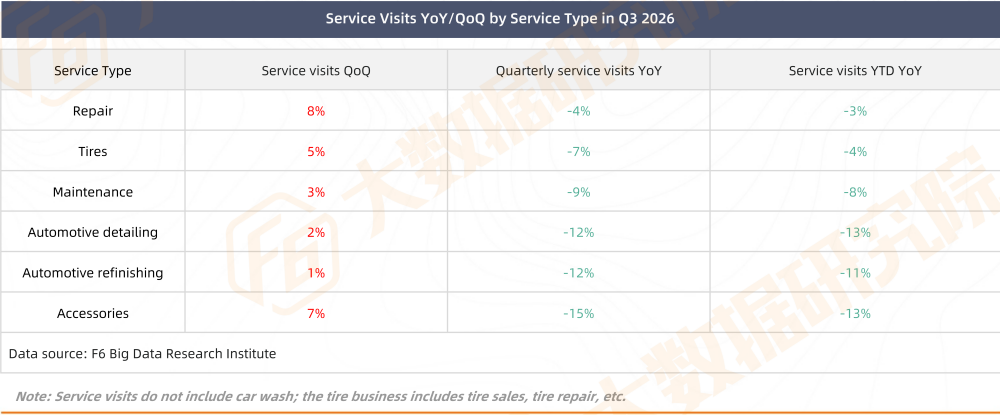
In Q3 2026, all six aftermarket service types achieved positive QoQ growth in service visits, indicating a phased recovery in customer traffic. However, compared with the same period last year, all business types saw YoY declines in service visits, reflecting overall consumer caution, with the pressure on service visit recovery being a common challenge across all business segments.
06. Service Visits YTD YoY of Selected Categories in 2026
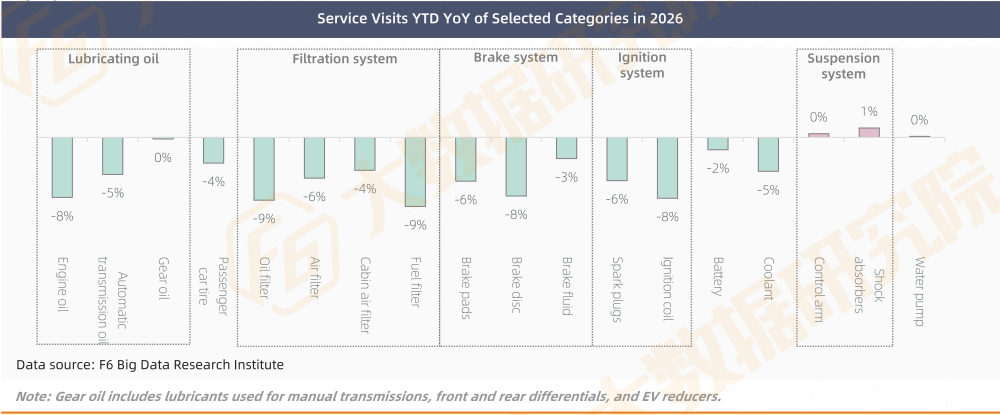
As of September 2026,in terms of YTD service visits across the following parts categories, only control arms, shock absorbers, and water pumps achieved modest positive growth, while the remaining categories generally faced pressure. Among them, battery shifted from a 5% YoY growth in service visits at mid-year to a current 2% YoY decline, indicating that demand growth momentum is fading rapidly.
07. Service Visits QoQ of Selected Categories in Q3
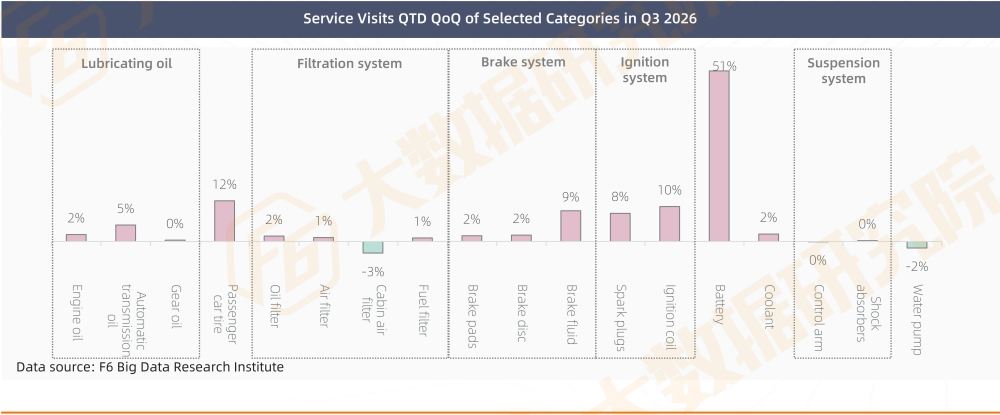
In Q3 2026, maintenance demand entered a peak period, with service visits for most traditional parts categories showing a phased recovery QoQ. Affected by the Q2 air conditioning peak season effect, demand for cabin air filters declined this quarter, while the battery business entered its traditional peak season.
08. Service Visits YoY of Selected Vehicle Brands in Q3
In Q3 2026, aftermarket service visits declined by 7% YoY, with the market facing downward pressure. By vehicle brand, BYD saw service visits grow 4% against the trend; Mercedes-Benz and Chery demonstrated stronger resilience, both declining 4% YoY; Chevrolet, Kia, Hyundai and other brands saw service visits decline by over 14% YoY, with a notable weakening in foot traffic at service outlets.
09. Service Visits YTD YoY of Selected NEV Brands in 2026
As of September 2026, major NEV brands maintained an upward trend in YoY service visits. Influenced by front-end new vehicle sales, Xiaomi Auto posted the strongest growth momentum in service visits, with a 105% YoY increase; Zeekr followed closely with 41% YoY growth, while brands like Ora and Geely saw relatively moderate growth rates. Service visit flows across NEV brands are gradually diverging.
10. Industry Trends in Q3 2026
In Q3, policy initiatives continued to advance, including the implementation of 17 new measures by nine government departments, the national safety standard for NEV repair taking effect in August, and the release of the national standard for inservice testing of power batteries, further optimizing the policy environment for the aftermarket.
Nine government departments rolled out 17 new policies, marking a turning point for the automotive aftermarket.
During Q3, the "Several Measures to Cultivate and Expand Automotive Aftermarket Consumption" continued to be implemented, with 17 initiatives covering 6 major areas including modification filing, RV camping, classic car regulations, and breaking repair monopolies. The new policy explicitly requires automakers to open up three-electric system repair technology and parts channels, prohibits warranty denial due to owners choosing social repair shops, breaks down 4S dealers' aftermarket monopolies institutionally, and directly benefits independent aftermarket chains, used vehicle reconditioning, and compliant modification sectors.
NEV safety national standards implemented in August; third-party repair restrictions lifted.
The national safety standard for NEV maintenance operations, GB/T 47439-2026, was officially implemented in August, specifying operational requirements for high-voltage system repair and clarifying maintenance qualification and personnel certification standards. The new national standards break the repair monopoly of car dealers, allowing third-party car garages to conduct NEV repairs in compliance. Chain stores with standardized three-electric system services will capture market share, and repair prices are expected to decline.
Seven departments launched a crackdown on illegal recycling and dismantling of end-of-life vehicles.
The Ministry of Commerce and 6 other departments carried out the "Special Action Plan for Crackdown on Illegal Recycling and Dismantling of End-of-Life Vehicles," to investigate and punish illegal activities of recycling end-of-life vehicles under the guise of "used car acquisition," trace back vehicle sources, and sever the illegal recycling chain. The auction records of end-of-life vehicles shall be inspected to identify subjects without qualifications, regulate the end-of-life vehicle recycling market, and benefit qualified recycling and dismantling enterprises.
National standard for power battery testing released, providing a basis for used car appraisal.
In September, the national standard "Test Methods for In-Service Inspection of Power Batteries for Electric Vehicles" was released, standardizing in-service testing methods for power batteries and providing a standardized testing process for battery health assessment. This standard benefits battery testing and repair services, provides a technical basis for NEV used car appraisal and repair, and promotes the standardized development of the aftermarket.